
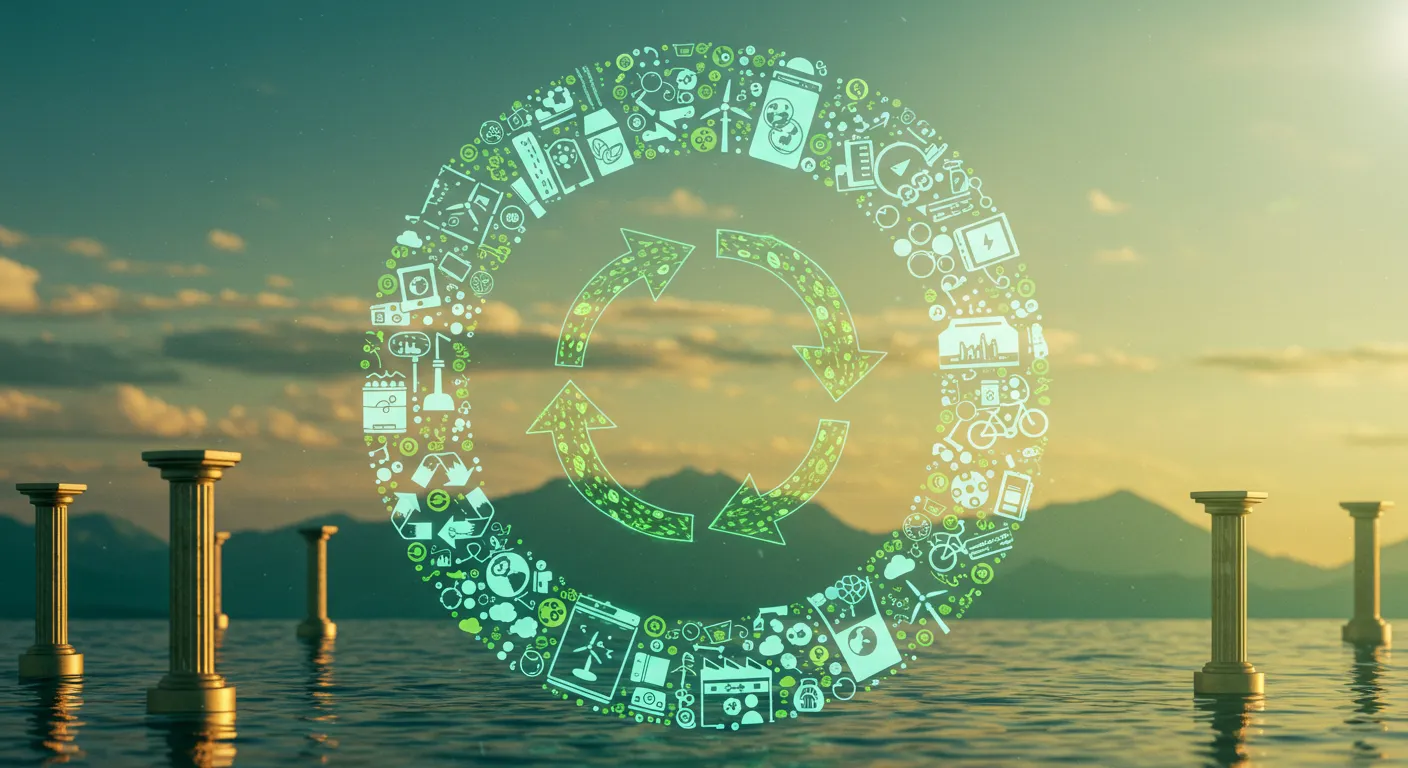
In a world where concern for the environment and sustainability is constantly growing, the circular economy has emerged as a revolutionary approach to addressing the problem of waste and promoting more efficient use of resources. In this blog, we will explore how the circular economy is transforming the way we view and manage waste, with a special focus on the crucial role of recycling.
What Is the Circular Economy?
The circular economy is an economic model that seeks to minimize waste and make the most of available resources. Unlike the traditional linear model of «take, make, dispose,» the circular economy is based on the premise that products, materials, and resources should remain in circulation for as long as possible, through strategies such as recycling, reuse, and remanufacturing.
Waste as Resources
One of the fundamental pillars of the circular economy is the concept that waste is actually a potential resource. Rather than viewing waste as a problem to be eliminated, the circular economy recognizes it as raw material that can be recovered and reintroduced into the supply chain.
This perspective has led to a shift in the way companies and consumers approach waste management.
The Role of Recycling
Recycling plays a central role in the circular economy by enabling the recovery and reintegration of recyclable materials into new products and processes.
From paper and plastic to glass and metals, a wide range of materials can be recycled and reincorporated into the supply chain, thereby reducing dependence on natural resources and minimizing waste generation.
Reputational Importance for Companies
The circular economy not only represents a fundamental approach to addressing global environmental challenges, but also plays a crucial role in business reputation and success. By committing to sustainable practices, companies demonstrate their concern for the environment and their commitment to corporate responsibility.
Adopting circular models not only reduces the environmental footprint and fosters innovation, but also differentiates companies as leaders in their sectors. Furthermore, by improving business resilience and complying with environmental regulations, companies can strengthen their relationships with stakeholders and cultivate a positive brand reputation.
The Role of Consumers
Consumers also have a crucial role to play in the circular economy. By choosing recyclable products, reducing excessive consumption, and practicing proper recycling habits, individuals can contribute significantly to waste reduction and the promotion of a more circular system. Education and awareness of the importance of recycling are key to driving behavioral change at the community level.
In Conclusion…
The circular economy represents an innovative and sustainable approach to addressing the problem of waste and promoting more efficient use of resources. By focusing on the transformation of waste into resources and the crucial role of recycling, the circular economy offers a path toward a more sustainable and prosperous future for generations to come.
At QALEON we have developed SineQia®, an innovative 360 platform that provides real-time monitoring of KPIs and performance metrics related to business sustainability. With SineQia®> drive sustainability and circularity in your company at every level through process optimization.
Contact us and discover everything QALEON can do for your company.