
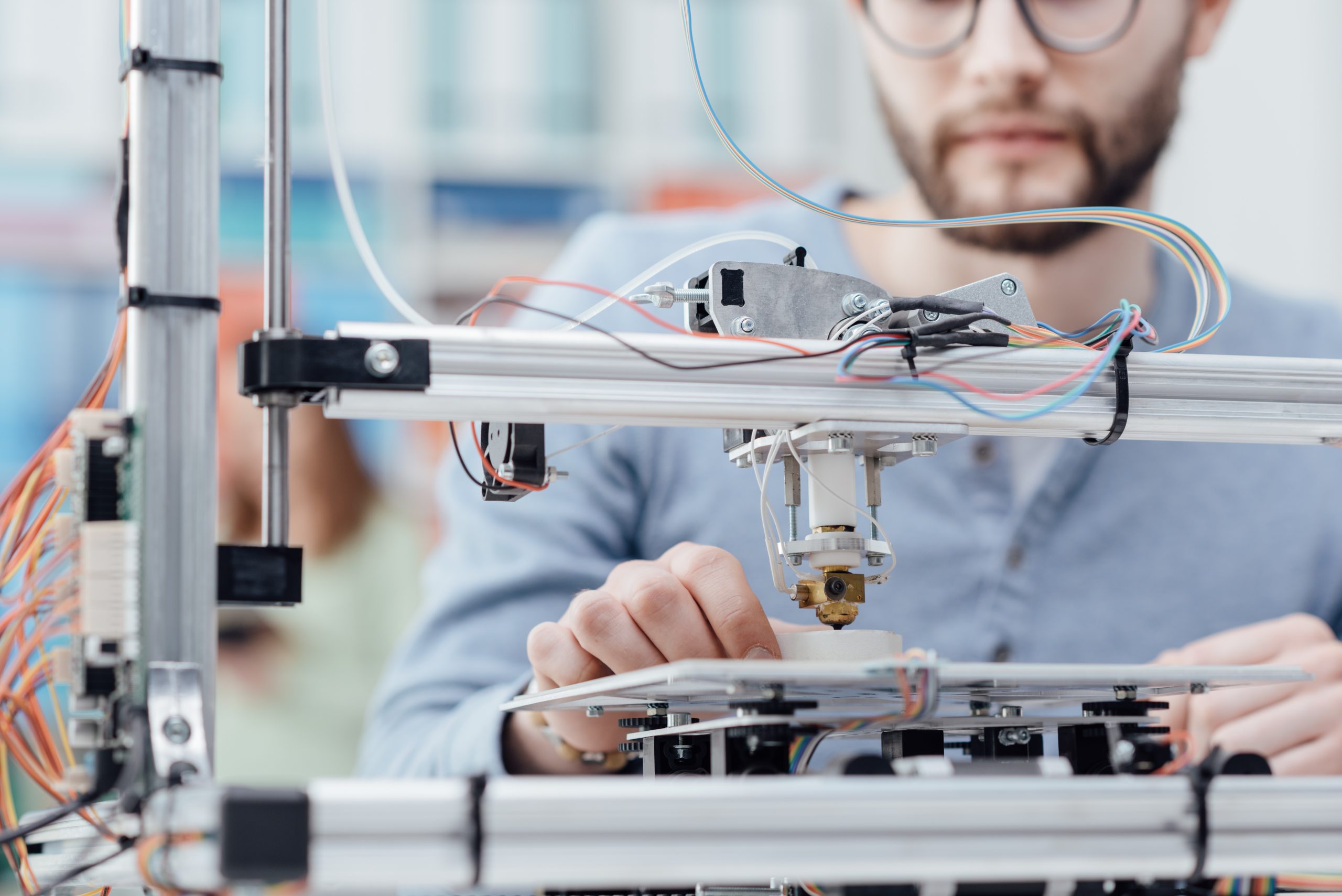
In a world that struggles to find sustainable solutions to urgent environmental problems, 3D printing emerges as a revolutionary and disruptive tool whose impact transcends innovation and penetrates the sphere of environmental sustainability.
Beyond being a fascinating technology, this innovation has the potential to transform the way we produce, consume, and recycle, offering benefits that directly impact the care of our planet.
In addition to the initial interest generated by watching objects form layer by layer, 3D printing has enormous potential to address some of the most important environmental challenges of our time. How does 3D printing make a difference in terms of sustainability?
On-Demand Production and Waste Reduction: Manufacturing Only What Is Needed
Unlike traditional methods, where mass manufacturing generates tonnes of polluting waste, one of the pillars of 3D printing is working with an on-demand production approach. This means that only the material necessary to create an object is used, significantly reducing waste and eliminating the leftovers that are typically generated in traditional processes such as molding or cutting.
For example, in sectors such as construction, waste has been reduced by up to 60% by using 3D printers to build structures, which not only saves resources but also reduces pollution compared to conventional methods.
The Power of Recycled Materials: Transforming Waste into Resources
One of the most exciting areas of this technology is its ability to use recycled materials as inputs. From PET plastic bottles transformed into recycled filament to agricultural waste converted into bioplastics, 3D printing turns what was once waste into useful objects, closing the lifecycle of products.
A growing number of companies are exploring how to convert waste that would otherwise end up in landfills or oceans into raw material for creating new, useful, and sustainable products.
Energy and Transport: Fewer Emissions, Greater Efficiency
In a globalized world, the transportation of products generates a significant amount of carbon emissions. 3D printing changes the rules of the game by enabling the manufacturing of parts directly where they are needed, eliminating the need to transport products over long distances and significantly reducing carbon emissions and associated energy expenditure.
Furthermore, many current 3D printers are energy-efficient, which makes this process even more environmentally friendly by minimizing its carbon footprint during the production process.
Innovative Applications Across Multiple Sectors
The applications of 3D printing are not limited to a single field. From personalized prosthetics made from bioplastics to sustainable homes built in a matter of days, the applications of 3D printing know no bounds. Even in the food industry, prototypes of 3D-printed foods are already being created that could reduce waste and decrease the need for intensive agriculture.
Is This the Solution of the Future?
Despite its enormous benefits, 3D printing still faces challenges, such as the limited availability of fully sustainable materials at scale and the need for greater accessibility to the technology. Nevertheless, its potential to transform industries and reduce environmental impact is undeniable.
By adopting this technology, we are one step closer to building a world where technological progress and respect for the environment go hand in hand. 3D printing is not just a technological innovation; it is a tool that can help us reimagine how we interact with the world around us.
By combining efficiency, sustainability, and creativity, we are building a future where human needs and care for the planet need not be in conflict.
In Conclusion
Can you imagine a future in which every home has a 3D printer that converts its own waste into new objects? This scenario, which once seemed like science fiction, is within our reach thanks to this incredible technology. 3D printing is more than an advance; it is an opportunity to redesign our production and consumption practices, moving toward a cleaner and more sustainable planet.
At QALEON, we understand the importance of staying at the forefront of new sustainability technologies. That is why we have developed SineQia®, an innovative 360 platform that provides real-time monitoring of key KPIs and metrics related to business sustainability.
With SineQia® you can optimize your production processes, reduce waste, and effectively measure the environmental impact of your operations.
Contact us and discover everything Qaleon can do to help you lead in waste reduction and effectively measure the environmental impact of your operations.