
Artificial intelligence has gone from being an option to becoming a strategic necessity. However, it is not just about adopting technology as a trend — it is about understanding the true return on investment in AI and how it can radically transform the performance of your organization.
What is the ROI of Artificial Intelligence and Why Does it Matter?
The ROI of artificial intelligence is a metric that compares the benefits generated by AI solutions against their total implementation cost. Unlike other technology investments, the return on AI manifests across multiple dimensions: economic, operational, and strategic.
According to recent studies, companies that correctly implement AI achieve an average ROI within 12 to 18 months. Some organizations have reported conservative returns of 214% over five years, which can increase to 761% with maximum optimizations.
The Tangible Benefits of AI: Beyond Automation
The strategic implementation of artificial intelligence generates measurable benefits across three fundamental areas.
Direct economic benefits. Reduction of operational costs: the automation of repetitive processes can reduce operational costs by up to 40%. Companies in the retail sector have optimized their inventories through AI, reducing waste and increasing efficiency by 30%. Revenue growth: intelligent personalization, dynamic pricing, and AI-based recommendations significantly increase conversion rates. Netflix and Amazon have demonstrated how AI personalization generates conversion rates superior to their competitors. Savings in human resources: this is not about eliminating jobs, but about freeing up valuable time. Teams can dedicate themselves to strategic tasks while AI manages routine operations, increasing the overall productivity of the business.
Operational benefits. These include process optimization with a reduction in logistics times of more than 40%, automation of over 60% of repetitive tasks in key areas, a radical decrease in human errors as AI systems maintain consistency and precision, agile decision-making through real-time data analysis for immediate market responses, and frictionless scalability enabling business growth without a proportional increase in resources.
Long-term strategic benefits. AI allows organizations to anticipate trends, identify market opportunities before the competition, and create new business models that would not be possible without this technology. Companies that adopt it strategically not only improve their efficiency, but position themselves as innovation leaders within the context of enterprise digital transformation.
How Long Does it Take to See Results with AI?
One of the most frequently asked questions about AI implementation is the time until real impact is seen. The answer depends on the use case, but most companies observe tangible improvements between 3 and 6 months after implementation. The full return on investment typically materializes between 12 and 18 months.
Critical Factors for Success
1. Alignment with objectives: Every project must resolve a specific and measurable need. 2. Data quality: AI is only as good as the data that feeds it. Poor data quality is the most frequent obstacle. 3. Team training: 62% of leaders consider AI literacy crucial, and data analytics is a fundamental skill. 4. Incremental approach: Starting with pilot projects allows the impact to be evaluated before scaling. 5. Continuous measurement: Establishing clear KPIs from the outset.
How Do You Know if it is Worth it?
If you face repetitive manual processes, difficulty analyzing data, a need to improve the customer experience, or high operational costs, AI can generate significant returns.
Discover How Executives Are Generating Real Impact with AI
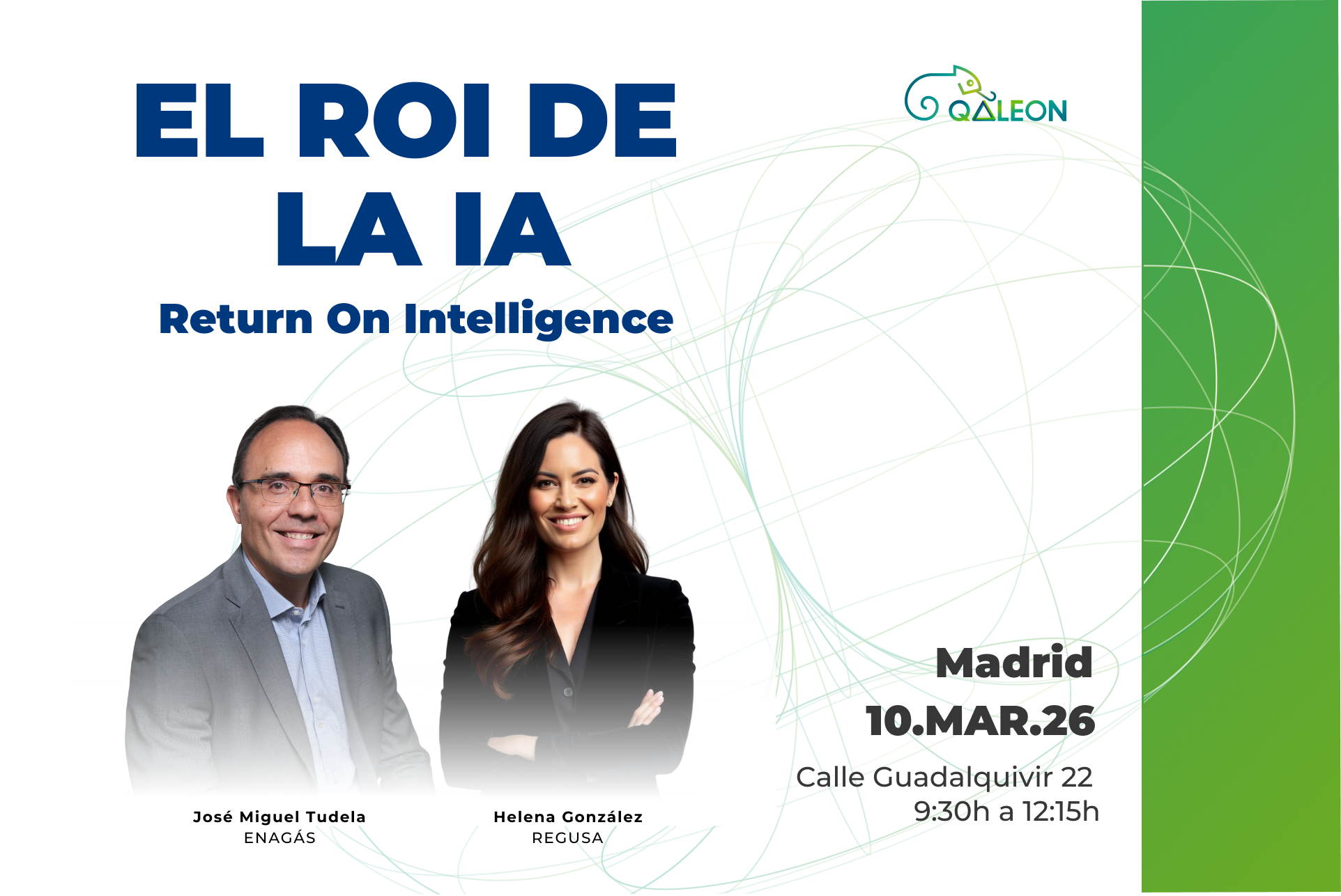
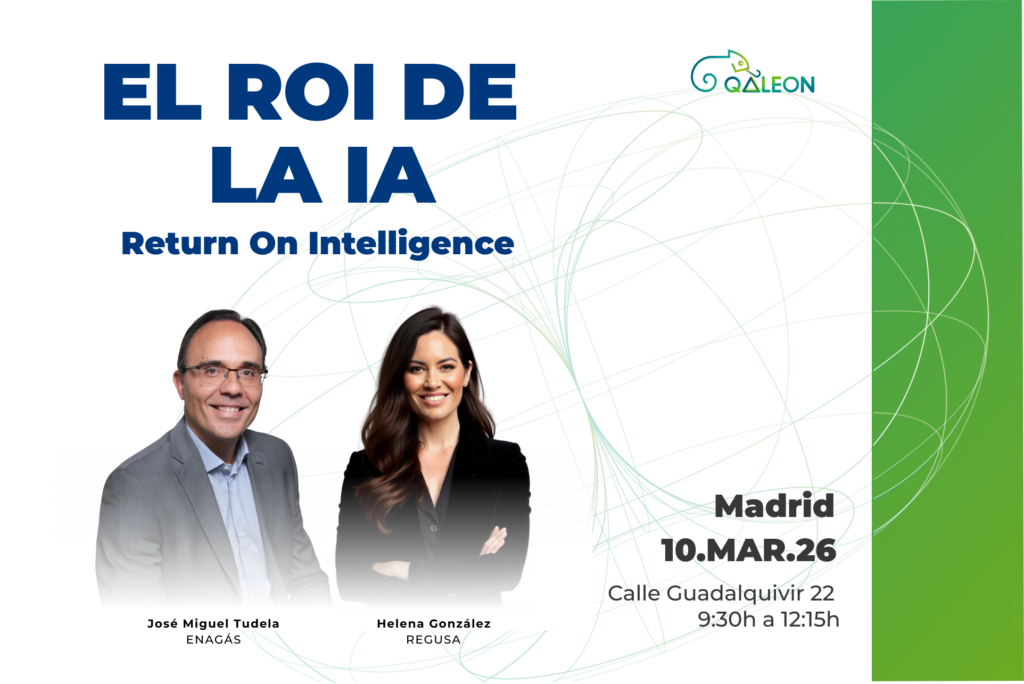
On 10 March 2026, QALEON is organizing «The ROI of AI: Return On Intelligence» — an exclusive event where executives will reveal how AI has gone from pilot to generating measurable impact.
José Miguel Tudela (Sustainability Director at ENAGAS) and Helena González (CEO of REGUSA) will share real transformation cases and applicable learnings.
Places are limited. This is your event if you are looking to understand how to generate real returns from artificial intelligence.