
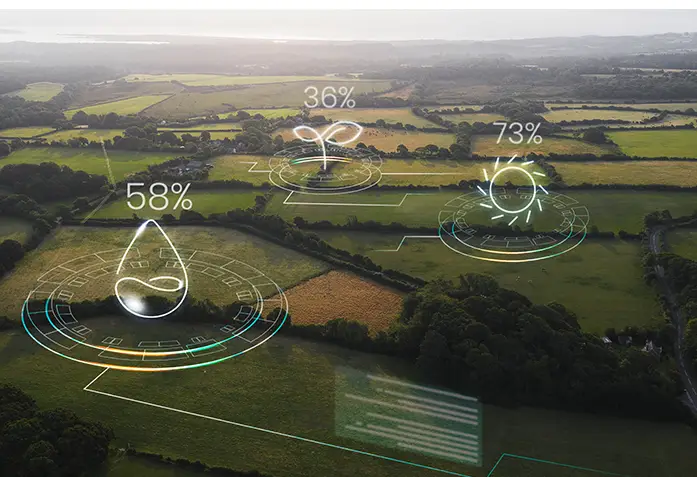
It is a fact: artificial intelligence (AI) has gone from being a futuristic technology to becoming a key tool across various industries, including environmental protection. As the planet faces critical challenges such as climate change, biodiversity loss, and pollution, AI emerges as a powerful ally for addressing these problems with efficiency and precision. This is why more and more governments are investing in technology and artificial intelligence to care for the environment.
What Does Artificial Intelligence Contribute to the Environment?
AI brings innovative solutions to environmental challenges through the analysis of large amounts of data, the automation of processes, and the prediction of complex scenarios. These capabilities enable more informed and effective decision-making in the management of natural resources.
Among the main contributions of AI to the environment are real-time ecosystem monitoring, where sensors and AI algorithms can detect changes in air, water, and soil quality, as well as the movements of fauna and flora, allowing for rapid responses to environmental imbalances. Efficient management of natural resources is another key area, where AI helps optimize water use in agriculture, anticipate forest fires, and control illegal fishing through satellite imagery. Finally, waste and pollution reduction is achieved as companies use AI to optimize their production processes, reducing energy consumption and industrial waste.
How Does AI Help Prevent Climate Change?
Climate change is one of the greatest challenges of our time, and artificial intelligence offers concrete tools to mitigate it.
Climate and Extreme Weather Prediction. AI improves climate models by analyzing millions of meteorological data points in real time, making it possible to forecast extreme events such as hurricanes, floods, or droughts. These predictions help governments and communities prepare and minimize damage.
Energy Consumption Optimization. Thanks to machine learning algorithms, AI systems can automatically regulate energy demand in smart buildings, industrial plants, and power grids, thereby reducing the carbon footprint.
More Efficient Renewable Energy. AI is used to predict solar and wind energy production, adjusting supply to meet demand. This improves the stability of power grids and encourages a smoother transition toward clean energy sources.
Sustainable Agriculture. Through AI-driven precision farming techniques, farmers can use fewer pesticides, fertilizers, and water, reducing environmental impact and increasing resilience to a changing climate.
Conclusion: A Sustainable Future Thanks to AI
Artificial intelligence is revolutionizing the way we protect our planet. From environmental monitoring to the fight against climate change, its applications are diverse and promising. However, it is also crucial that the development of these technologies be ethical, transparent, and sustainable, to ensure that the benefits reach all people and ecosystems.
Investing in AI for the environment is not just a smart option — it is an urgent necessity to secure a sustainable future.
That is why at QALEON, we are committed to technological advancement to revolutionize the industry and care for the environment through sustainability. We have developed SineQia®, an innovative 360 platform that provides real-time tracking of KPIs and key metrics related to business sustainability.
With SineQia® you can make informed decisions based on accurate data, optimize your processes, and meet your sustainability objectives efficiently and transparently.