
The technological world is in constant evolution, and 2025 promises to be a turning point for a variety of innovations that will impact both our daily lives and the business world. From new infrastructures that will optimize the way we manage data, to advances in technologies that will improve sustainability and health, we are entering an era marked by automation, interconnection, and energy efficiency. Here we present some of the most promising technological trends we will see in 2025.
What Are the Technological Trends That Will Define 2025?
1. Multifunctional Robots
Robotics is entering a phase of maturity, and in 2025 we will witness the deployment of robots that go beyond simple tasks to perform multiple functions autonomously. In sectors such as manufacturing, multifunctional robots will be able to take on physical tasks, such as assembly or material transportation, but will also be able to perform cognitive tasks, such as real-time decision-making or inventory management.
Advances in artificial intelligence have allowed these robots to evolve into more complex systems, capable of learning from their environment and adapting to unforeseen situations. This will be key not only in industry, but also in the medical sector, where robots will be able to assist in delicate surgeries, administer medication precisely, or even monitor patient recovery.
2. Evolution of the Metaverse
The metaverse is set to redefine how we interact with technology and with each other. In 2025, this fusion of the physical and the digital will expand, integrating into various aspects of daily life. People will be able to work, socialize, shop, and learn in virtual environments that will replicate the real world with great fidelity, but with advantages such as personalization and remote accessibility.
This growth of the metaverse will not only be driven by virtual and augmented reality platforms, but also by advances in 5G connectivity and cloud computing, which will enable a smoother experience that is less dependent on physical devices. Sectors such as entertainment, education, and commerce will see new opportunities to improve the user experience and offer more immersive and engaging interactions.
3. New Distributed Cloud Solutions
Cloud computing has been one of the great revolutions of the last decade, but in 2025 it will evolve toward a more distributed approach. Distributed cloud architectures, which combine multi-cloud environments with edge computing, will offer new possibilities in terms of flexibility, security, and scalability.
Companies will adopt hybrid strategies that will allow them to make the most of both centralized cloud and edge computing, where data is processed closer to where it is generated. This evolution will be essential for improving the resilience and adaptability of businesses, especially in sectors that depend on large volumes of data, such as retail, healthcare, and logistics.
4. Advanced Recycling Technology
One of the greatest global priorities for 2025 will be sustainability, and recycling will play a fundamental role in this effort. Advanced recycling technologies will enable the efficient reuse of materials that until now were difficult to recycle, such as certain plastics and electronic components.
Chemical recycling, which breaks down complex materials into their basic components to be reused in new products, will be one of the main innovations. Furthermore, artificial intelligence and robotics will play a key role in automating the waste sorting process, significantly increasing recycling efficiency. This approach will not only reduce environmental impact, but will also be economically viable for companies, which will find new opportunities in the circular economy.
5. Brain-Computer Interfaces
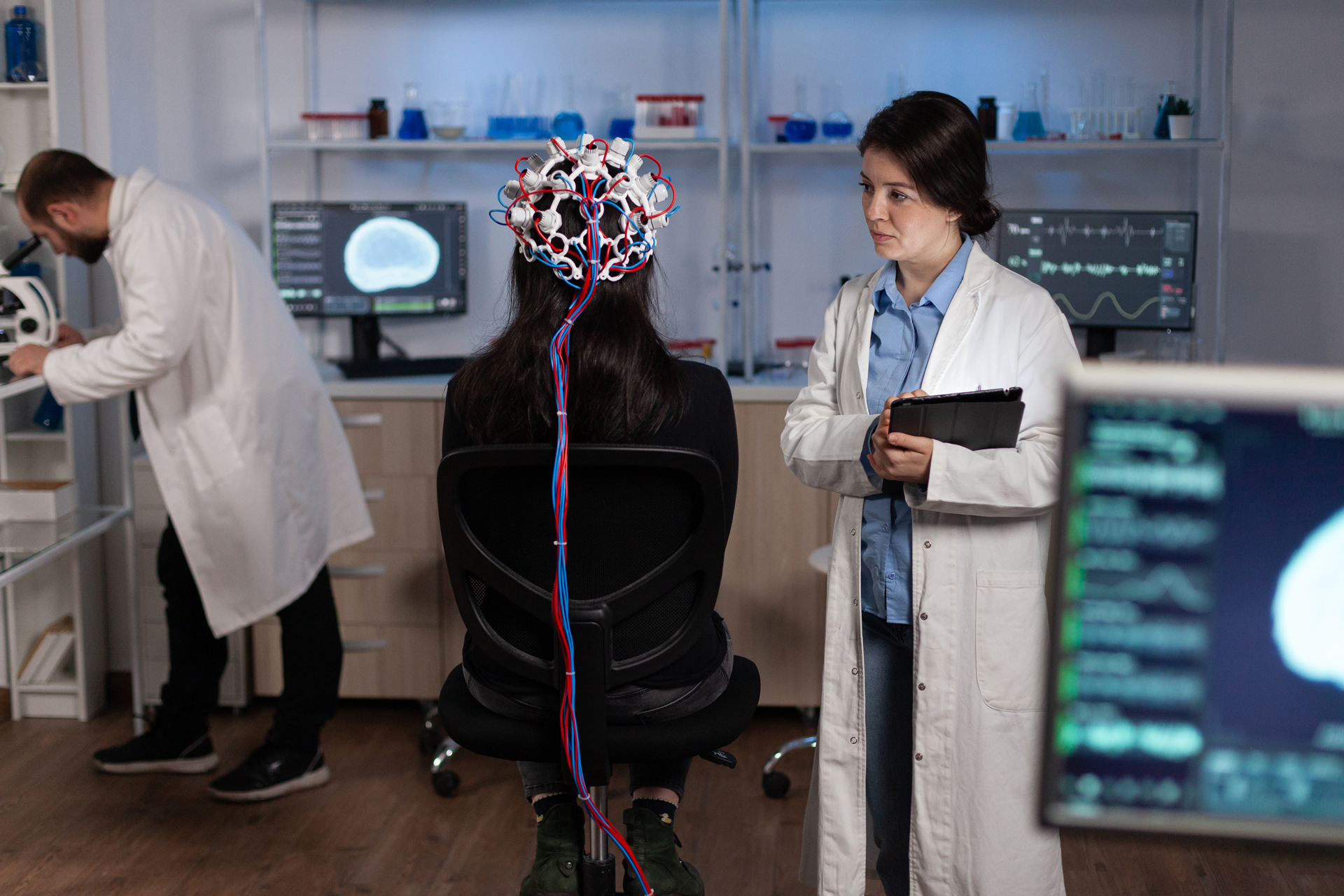
Brain-computer interfaces (BCI) represent one of the most exciting and futuristic areas of technology. By 2025, we will see significant advances in this technology, which will enable direct communication between the human brain and machines. Although still in its early stages, BCI has the potential to transform fields such as neurological rehabilitation, by allowing patients to control prosthetics with their thoughts, or even restore lost sensory or motor functions.
Beyond medical applications, brain-computer interfaces could also have uses in cognitive enhancement and communication, allowing people to interact with technological devices in a much more natural and efficient way. As research advances, these interfaces could become an everyday tool for improving productivity and quality of life.
In Conclusion
2025 will mark a before and after in global technological development. With advances in robotics, the metaverse, cloud computing, and sustainable technologies such as advanced recycling, companies and individuals will have new opportunities to improve efficiency, reduce costs, and adopt more sustainable practices. Furthermore, the integration of brain-computer interfaces promises to open new frontiers in human-machine interaction. Keeping up with these trends will be crucial to making the most of the opportunities the future has to offer.
At QALEON we understand the importance of staying at the technological forefront. That is why we have developed SineQia®, an innovative 360 platform that provides real-time monitoring of KPIs and performance metrics related to business sustainability.
With SineQia® your business can make the most of the advantages of AI to optimize processes, improve collaboration, and open new growth opportunities. Don’t get left behind in the evolution of the future of work.
Contact us and discover everything QALEON can do for your company