
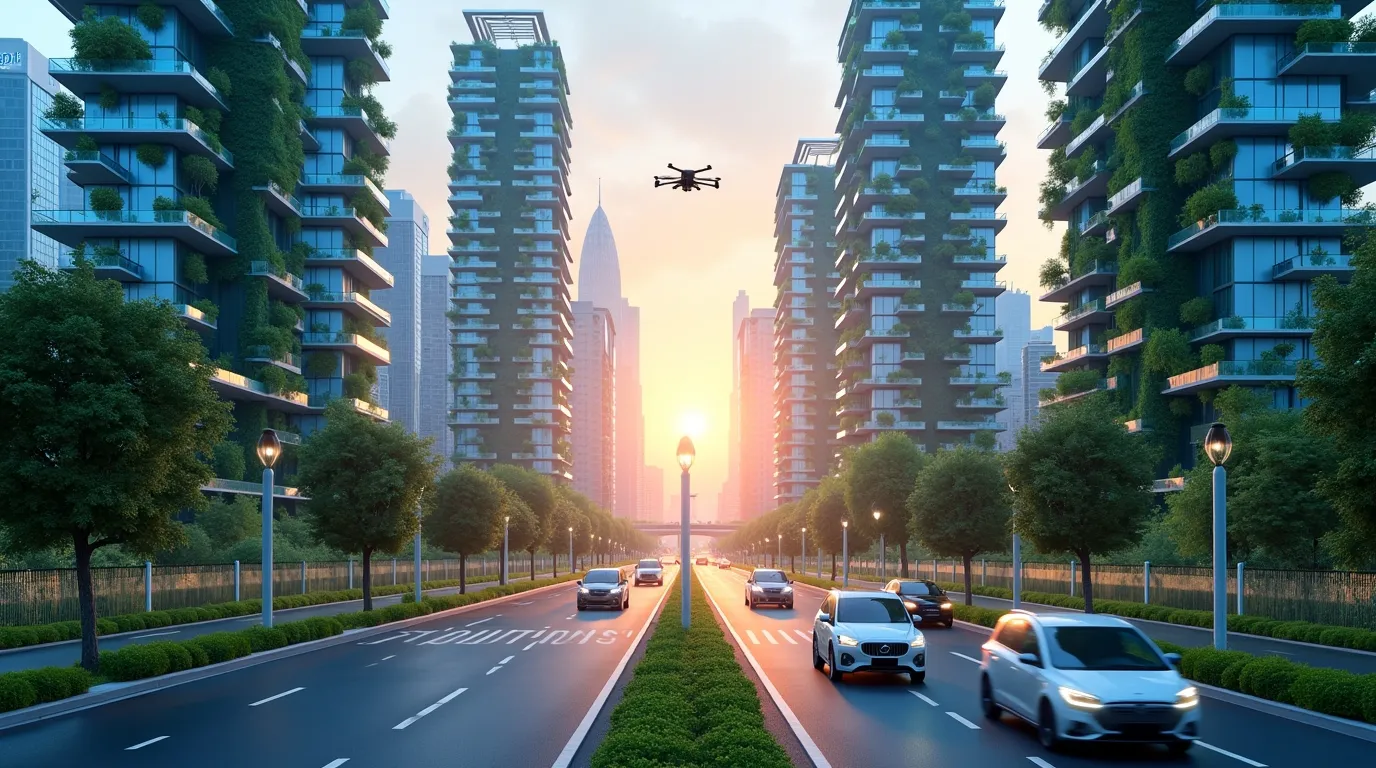
Imagine a city where traffic flows smoothly, the air is clean, energy is used efficiently, and public services respond to citizens’ needs in real time. This is the concept of a smart and sustainable city — a futuristic vision that is taking shape in the present. But are these cities really the future of urban life?
What Are Smart and Sustainable Cities?
Smart and sustainable cities are urban environments that use advanced technologies and data to improve the quality of life of their inhabitants, increase the efficiency of services, and promote sustainability. These cities integrate information, communication, and technology systems to manage resources more effectively, reduce environmental impact, and create more livable spaces.
Key Features
Technology and connectivity: Smart cities use sensors, the Internet of Things (IoT), and big data to collect and analyze information in real time. This enables more efficient management of urban resources and services.
Sustainable mobility: They encourage the use of efficient public transport, electric vehicles, bicycles, and shared mobility solutions to reduce congestion and carbon emissions.
Energy and resources: They implement smart electricity grids and promote the use of renewable energies. They also manage water and waste more efficiently to minimize waste.
Participatory governance: They involve citizens in decision-making through digital platforms, improving transparency and efficiency in urban management.
Green infrastructure: They include green spaces, vegetated roofs and walls, and recreational areas that improve air quality and the mental health of citizens.
Benefits of Smart and Sustainable Cities
Smart and sustainable cities offer a wide range of benefits that can transform urban life. They improve quality of life through the efficient management of public services and the reduction of pollution, creating a healthier and more livable environment.
The optimization of resource use reduces costs for both governments and citizens, providing energy and economic savings. Furthermore, they encourage the use of renewable energies and sustainable mobility, contributing significantly to the reduction of the carbon footprint and the fight against climate change.
Monitoring and rapid response systems improve public safety and the city’s resilience in the face of emergencies and natural disasters. Finally, by adopting new technologies, smart cities become centers of innovation and investment attraction, driving economic growth and competitiveness.
Are Smart Cities the Future?
The trend toward urbanization is undeniable; it is estimated that by 2050, around 68% of the world’s population will live in urban areas. With this growth, cities face unprecedented challenges in terms of infrastructure, the environment, and public services. Smart and sustainable cities offer viable solutions to address these challenges, making their adoption not only desirable, but essential.
Several examples around the world already show the way forward. Cities such as Singapore, Barcelona, and Copenhagen are implementing smart and sustainable initiatives that improve urban life and serve as models for other cities. However, the transition to these cities of the future requires significant investments, cross-sector collaboration, and long-term planning.
In Conclusion…
Smart and sustainable cities represent an integrated and efficient vision of the urban future. As we continue to advance toward a more connected and environmentally conscious world, we are likely to see an expansion of these cities. Their ability to improve quality of life, reduce environmental impact, and foster innovation positions them as a crucial component of the future of urban life. The key will lie in the collaboration and commitment of all stakeholders involved to turn this vision into reality.
At QALEON we have developed SineQia®, an innovative 360 platform that provides real-time monitoring of KPIs and performance metrics related to business sustainability. With SineQia® drive sustainability and circularity in your company at every level through process optimization.