
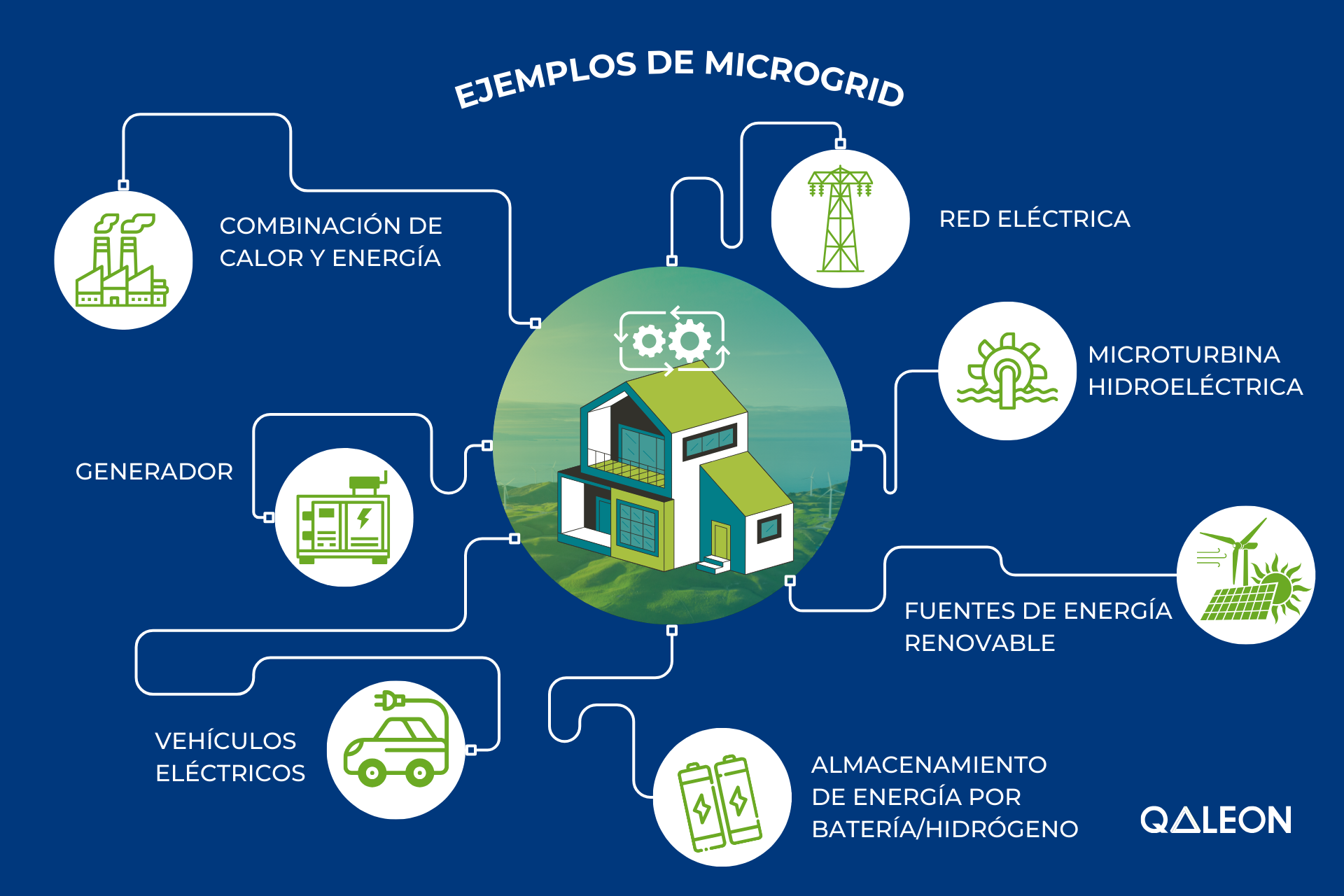
In a world facing growing energy challenges — from blackouts to climate change — the need for sustainable solutions has never been more urgent. In this context, microgrids emerge as a transformative technology that promises to redefine how we generate, distribute, and consume energy.
But what makes these networks so innovative? Beyond their technical capabilities, microgrids represent a paradigm shift: a step toward energy self-sufficiency, environmental sustainability, and community empowerment.
What is a Microgrid and Why Does it Matter?
A microgrid is a local electrical network that can operate either connected to the conventional power grid or independently, ensuring a reliable supply even in critical situations. Unlike traditional centralized networks, microgrids combine various energy sources — such as solar panels, wind turbines, and batteries — to create an efficient and resilient system.
This means that communities, businesses, and institutions that adopt microgrids not only reduce their dependence on large electricity companies, but also lower carbon emissions, optimize costs, and strengthen their energy security.
How Are Microgrids Changing the Energy Landscape?
The impact of microgrids goes beyond technology — they are transforming the relationship between people and energy. Here are some of their key advantages:
Accessible and Personalized Energy. Microgrids produce electricity where it is consumed, eliminating the inefficiencies and losses associated with long-distance transmission. This makes them an ideal option for rural communities, university campuses, hospitals, and industrial parks.
Resilience in Times of Crisis. Extreme weather events, such as hurricanes and storms, are becoming increasingly frequent. Microgrids allow communities to maintain their energy supply in the event of failures in the main grid, providing stability and protection in critical moments.
Sustainability as a Core Principle. With a focus on renewable energy sources, microgrids are a powerful tool for combating climate change. By reducing dependence on fossil fuels, they contribute to a cleaner and healthier future for all.
Empowerment and Autonomy. Microgrids allow communities and organizations to take control of their energy. It is no longer just about consuming electricity, but about managing and producing it in a conscious and strategic way.
Success Stories in the Use of Microgrids
Around the world, microgrids are making a difference:
After the devastating Hurricane María, Puerto Rico adopted microgrids to rebuild its energy system, prioritizing resilience and sustainability. In Africa, rural communities now have access to electricity thanks to solar-based microgrids, driving social and economic development. In countries such as the United States, universities and hospitals are implementing microgrids to ensure uninterrupted operations and reduce their carbon footprint.
The Future of Energy is Decentralized
Microgrids are not just a technical solution — they are the symbol of a profound shift in the way we understand and use energy. This decentralized model fosters innovation, drives sustainability, and empowers communities to make energy decisions that benefit both the planet and its inhabitants.
Furthermore, advances in technology — such as artificial intelligence and energy storage systems — are making microgrids more accessible and cost-effective than ever. This opens the door for more people and organizations to adopt this model in the coming years.
How to Get Started with a Microgrid
The transition to a microgrid begins with planning. It is necessary to assess local energy needs, identify available renewable sources, and design a system that adapts to the specific conditions of each community or project.
With the right support, implementing a microgrid is not only possible, but can become a transformative change for the environment and lifestyle of those who adopt it.
In Conclusion
Ready to join the microgrid revolution? Explore how this technology can transform your home, your business, or your community. Leave us your comments and share this article so that more people can discover the power of local and sustainable energy. The future starts today!
At QALEON, we believe that sustainability should be a central pillar of modern business strategy. That is why we have developed SineQia®, an innovative 360 platform that provides real-time tracking of KPIs and key metrics related to business sustainability.
With SineQia® you can make informed decisions based on accurate data, optimize your processes, and meet your sustainability objectives efficiently and transparently.
Contact us and discover everything QALEON can do for your company to move toward a more sustainable future, improving your performance and competitiveness.