
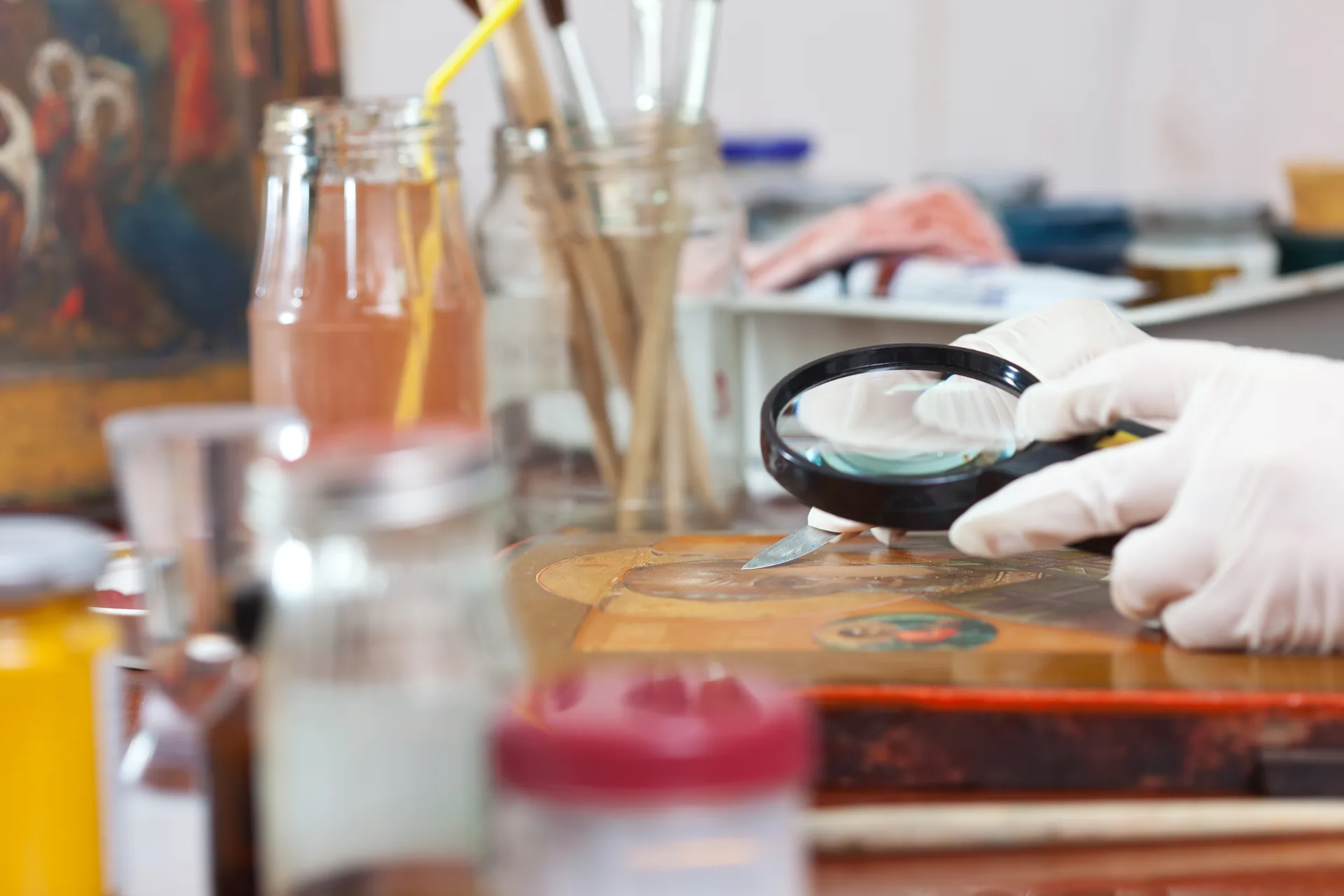
Artificial Intelligence (AI) represents a revolution in almost every aspect of our lives — and the world of art is no exception. Thanks to the innovative techniques this technology provides, we can discover, in great detail, the secrets hidden within ancient works of art.
Image Analysis and Digital Restoration
Thanks to the algorithms used in artificial intelligence, researchers can scan and study works of art without damaging them. Another very interesting application for the art world is the ability to restore them digitally. This technology is also capable of restoring lost colors, removing layers of aged varnish, and reconstructing damaged fragments. Artificial intelligence can show us what works of art looked like in their original form.
Furthermore, thanks to machine learning algorithms, AI can also identify painting patterns and brushstrokes in a highly optimized way. In this sense, it helps discover the styles of unknown artists or date specific pictorial techniques.
3D Topography
Today, thanks to 3D scanning using light and color, even the most subtle reliefs of a work of art can be identified.
Once the 3D map is created, artificial intelligence takes over to examine and compare the different elevations of the artwork. This technology is capable of analyzing details as minute as the thickness of a single brushstroke hair.
This technology is not only useful for authenticating paintings or identifying authors. Artificial intelligence allows us to go further by determining which parts of a work were created by a specific painter. Thanks to this innovative technique, some paintings that were previously attributed to a single artist are now recognized as works from that artist’s school.
Infrared Spectroscopy and X-rays
This revolutionary technique, with the help of artificial intelligence, allows us to discover the art hidden beneath layers of paint. In many cases, it was very common for artists to reuse canvases to create new works. Uncovering these hidden artworks gives researchers a deeper understanding of the artist — their early sketches, their original ideas, and the evolution of their painting style make for a fascinating field of study. Thanks to technological advances, we can discover and learn more about artists and their cultural legacy.
Forgery Detection and Cultural Connections
Artificial intelligence plays a fundamental role in the fight against art forgeries. Through the use of image and pattern comparison algorithms, AI systems can analyze highly determinative elements such as the chemical composition of paint or the style of the brushwork.
This same algorithm, in addition to detecting forgeries, is also capable of linking images to historical and geographical data. This application allows us to discover and better understand the relationships between different eras and regions — helping us understand not only the artist, but also their broader context.
Conclusion
Artificial intelligence can also play a fundamental role in the study and preservation of art. With its ability to analyze large amounts of data and unravel invisible patterns, AI is revealing hidden masterpieces and helping to restore the past in a more precise and detailed way. In doing so, not only are artistically valuable pieces recovered, but the historical and cultural narratives that connect us to our heritage are also enriched.
At QALEON, we are committed to technological advancement to revolutionize the industry through sustainability. That is why we have developed SineQia®, an innovative 360 platform that provides real-time tracking of KPIs and key metrics related to business sustainability.
With SineQia® you can make informed decisions based on accurate data, optimize your processes, and meet your sustainability objectives efficiently and transparently.