
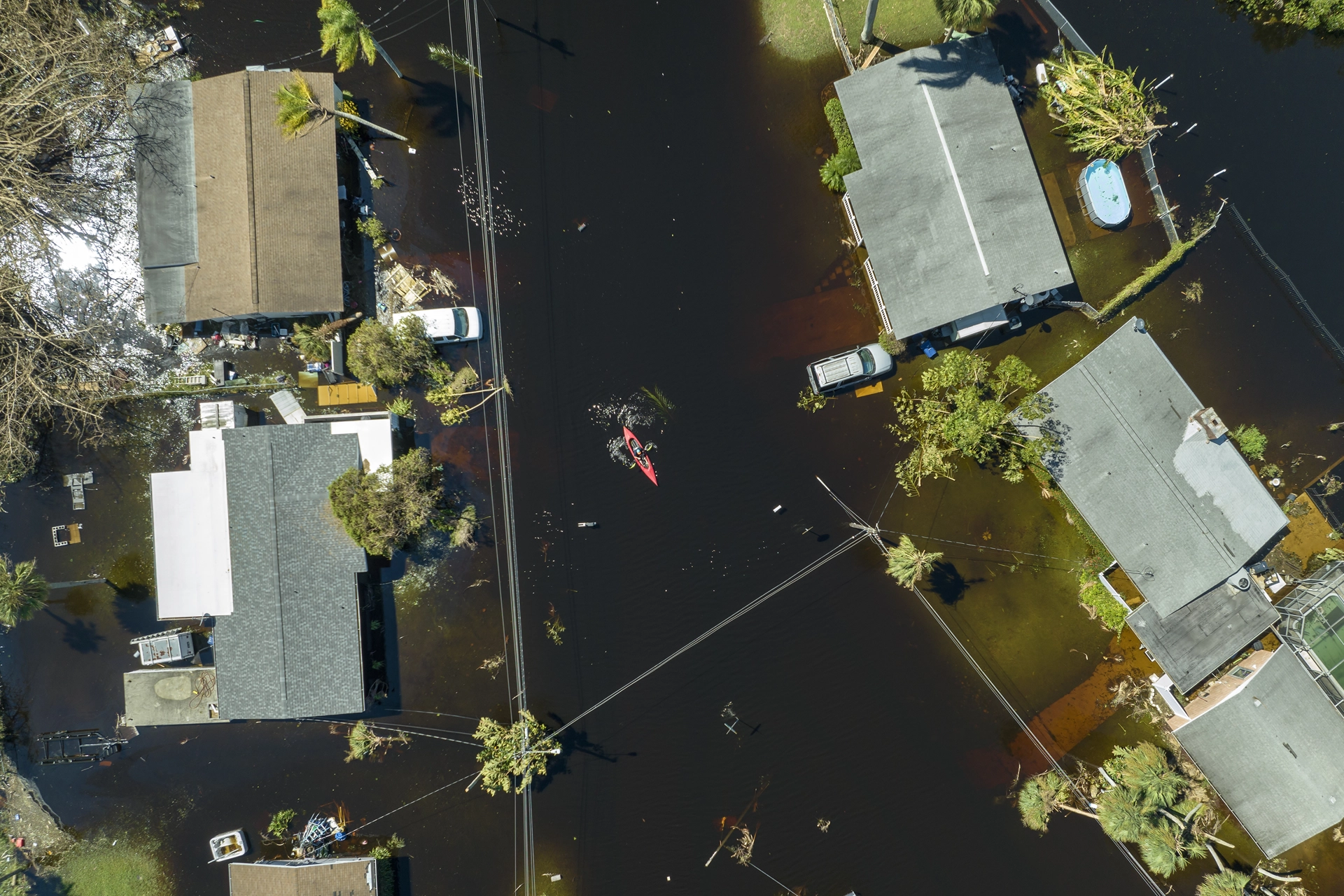
Artificial Intelligence (AI) is transforming the way we approach natural disasters. Thanks to its data processing and analysis capabilities, AI has become a key tool for preventing, mitigating, and responding to these crises.
In this article, we will explore how AI is revolutionizing the prediction of natural disasters and its implications for the future.
What Are Natural Disasters and Why Are They So Difficult to Predict?
Natural disasters — such as earthquakes, hurricanes, floods, and volcanic eruptions — are extreme events that can cause significant damage to human life, infrastructure, and the environment.
The accurate prediction of these events is a challenge due to the complexity of natural systems, the lack of complete historical data, and the need for advanced mathematical models. This is precisely where artificial intelligence is making a difference.
AI combines advanced technologies such as machine learning, natural language processing, and neural networks to analyze large volumes of data in real time. Here are some of the areas where it is applied:
Meteorological Data Analysis. AI processes data from satellites, radars, and weather stations to identify climate patterns. This makes it possible to predict hurricanes with greater accuracy, estimate the intensity of storms and cyclones, and detect conditions conducive to wildfires.
Seismic and Geological Monitoring. Neural networks analyze seismic signals to detect tectonic movements that could anticipate earthquakes. These tools are also useful for predicting volcanic eruptions through the analysis of gases and vibrations, and for detecting tsunamis in their early stages.
Flood Prediction. AI uses data from hydrological sensors and rainfall models to anticipate floods and assess their potential impacts. This helps authorities issue early warnings, design evacuation plans, and minimize human and material losses.
Success Stories in the Use of AI for Natural Disasters
Several notable examples demonstrate the positive impact of AI:
Google Flood Forecasting Initiative. Google uses AI to predict flooding in flood-prone regions such as India and Bangladesh. Its algorithms integrate meteorological data and hydrological models, achieving more accurate forecasts than traditional methods.
IBM Watson and Wildfires. IBM Watson employs AI to monitor wildfires in real time using data from satellites and weather stations, enabling better allocation of resources to combat them.
Artificial Intelligence Global Seismic Network. Researchers have developed deep learning networks that identify small tremors that could be precursors to larger earthquakes, significantly improving response capacity.
Challenges and Limitations
Despite its advances, AI faces challenges in predicting natural disasters. Data quality is a key concern, as the lack of reliable or complete data limits the effectiveness of models. High costs are also a barrier, since implementing AI-based solutions requires significant investment in infrastructure and training. Finally, interpretability remains an issue, as some AI models are complex and difficult to understand, which can hinder their adoption.
The Future of AI in Disaster Management
With the continued advancement of technology, AI could play an even more crucial role in disaster mitigation. Some expected developments include real-time data integration to improve early warnings, the use of drones and IoT sensors to collect information from remote areas, and global collaboration to share models and data.
In Conclusion
Artificial intelligence is revolutionizing the way we face natural disasters. Although challenges remain, its ability to analyze large volumes of data and generate accurate predictions is saving lives and reducing losses. The future promises even more innovative solutions, making AI an indispensable ally for a more resilient world.
At QALEON, we understand the importance of staying at the forefront of new sustainability technologies. That is why we have developed SineQia®, an innovative 360 platform that provides real-time tracking of KPIs and key metrics related to business sustainability.
With SineQia® you can optimize your production processes, reduce waste, and measure the environmental impact of your operations effectively.
Contact us and discover everything Qaleon can do to help you lead in reducing waste and measuring the environmental impact of your operations effectively.