
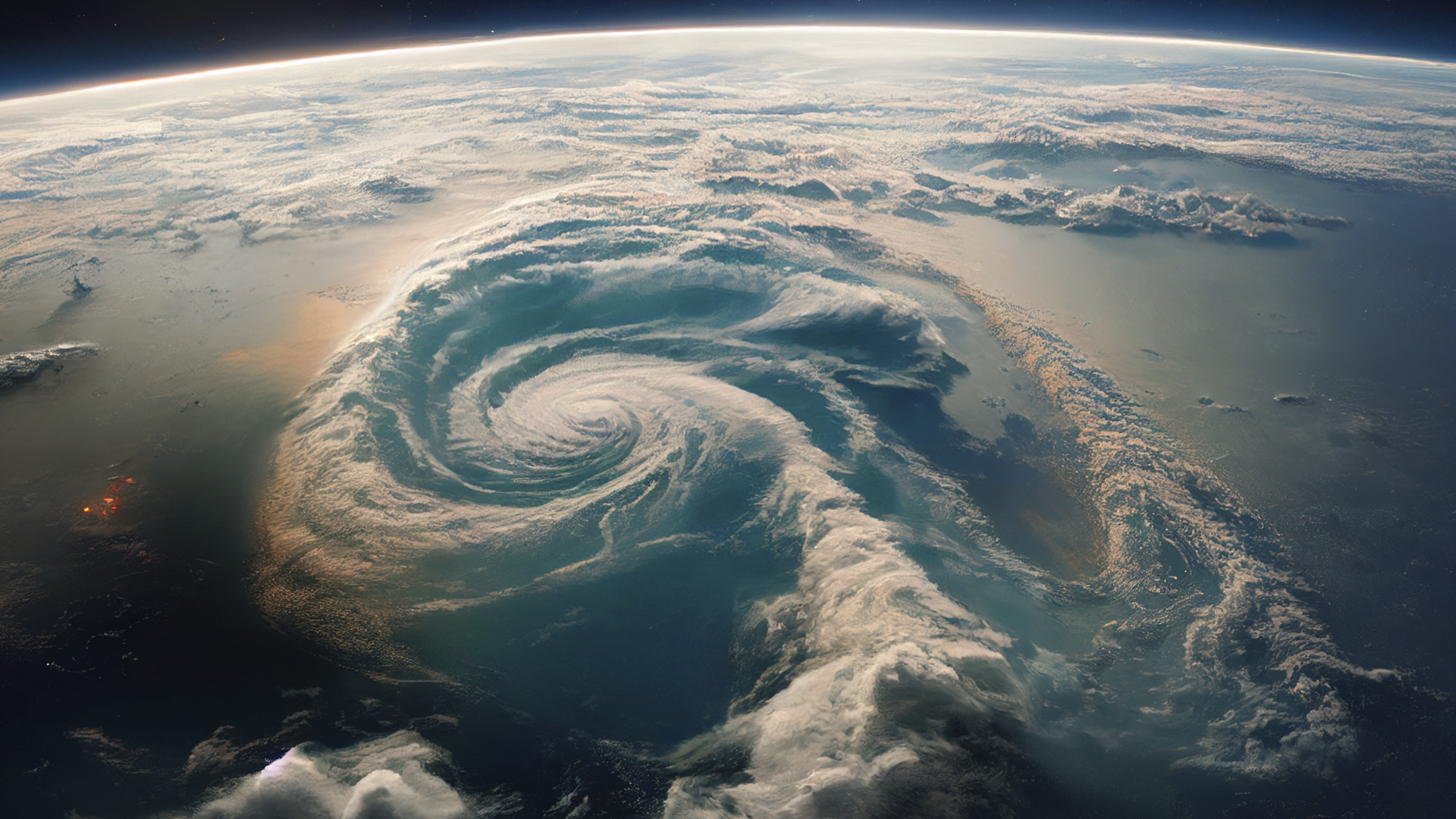
Extreme weather has moved from being a long-term concern to an immediate operational risk for industrial assets, critical infrastructure, and public administrations. A wildfire reaching a substation, a flash flood shutting down a port, or a heatwave straining the power grid are no longer hypothetical scenarios. AI for natural disaster prediction makes it possible to anticipate these events hours or days in advance by combining satellite data, IoT sensors, and deep learning models. This article explains how those systems work, what role real-time data plays, and how they translate into concrete sector use cases.
Why classical models are no longer enough
For decades, weather forecasting has relied on solving physical equations through numerical simulations on supercomputers. It works, but it is slow and expensive: the European Centre for Medium-Range Weather Forecasts needs about six hours of compute time to produce a reference forecast. AI models compress that cycle dramatically and improve accuracy in the process.
What exactly does machine learning add beyond physics-based models?
GraphCast, the model developed by Google DeepMind, produces a global 10-day forecast in under one minute and outperforms the ECMWF reference system on 90% of 1,380 metrics. AI-based natural disaster prediction is the discipline that applies machine learning models to meteorological, geophysical, and sensor data in order to estimate the probability, location, and intensity of an extreme event before it occurs. The key difference: physics-based models start from equations; AI models learn patterns directly from four decades of historical data.
The critical role of real-time data
A predictive model is only as good as the freshness of the data feeding it. This is where IoT sensor networks, satellite imagery refreshed every few minutes, ocean buoys, weather radars, and increasingly social media mentions acting as a distributed human sensor come into play.
How do such different data sources merge into a single decision?
Through ingestion architectures and multimodal models. A real-world energy sector case: Iberdrola uses advanced AI algorithms to anticipate risks from storms, heatwaves, and floods affecting its electrical grid, optimizing emergency response and prioritizing investments in critical infrastructure. When the model detects convergence of critical variables, it triggers an operational action: load reduction, preventive crew deployment, or controlled shutdown. The gap between acting 24 hours ahead and 24 minutes ahead is enormous: a warning issued 24 hours in advance can reduce damage by up to 30%.
Sector use cases
Industry and energy: protection of critical assets against thunderstorms and floods, predictive maintenance planning driven by climate risk.
Smart cities: proactive management of urban drainage ahead of torrential rainfall, automated activation of emergency protocols.
Retail and logistics: rerouting and stock adjustments in response to weather alerts affecting distribution centers.
Insurance and reinsurance: global economic losses from natural disasters reached USD 320 billion in 2024, making accurate risk modeling a direct driver of underwriting profitability.
In summary
AI for natural disaster prediction uses machine learning models and real-time data to anticipate extreme events with greater accuracy and speed than traditional physics-based models. GraphCast outperforms the ECMWF system on 90% of evaluated metrics and produces 10-day forecasts in under one minute. A warning issued 24 hours in advance reduces damage by up to 30%. Every dollar invested in early warning systems yields more than ten in economic benefits. The operational key is integrating heterogeneous data sources into a single actionable decision layer.
Applying it to your business
At Qaleon we design custom applied AI and advanced analytics solutions to integrate real-time data, predictive models, and operational dashboards on top of your organization’s existing infrastructure. If you want to explore how this applies to your business, let’s talk.