
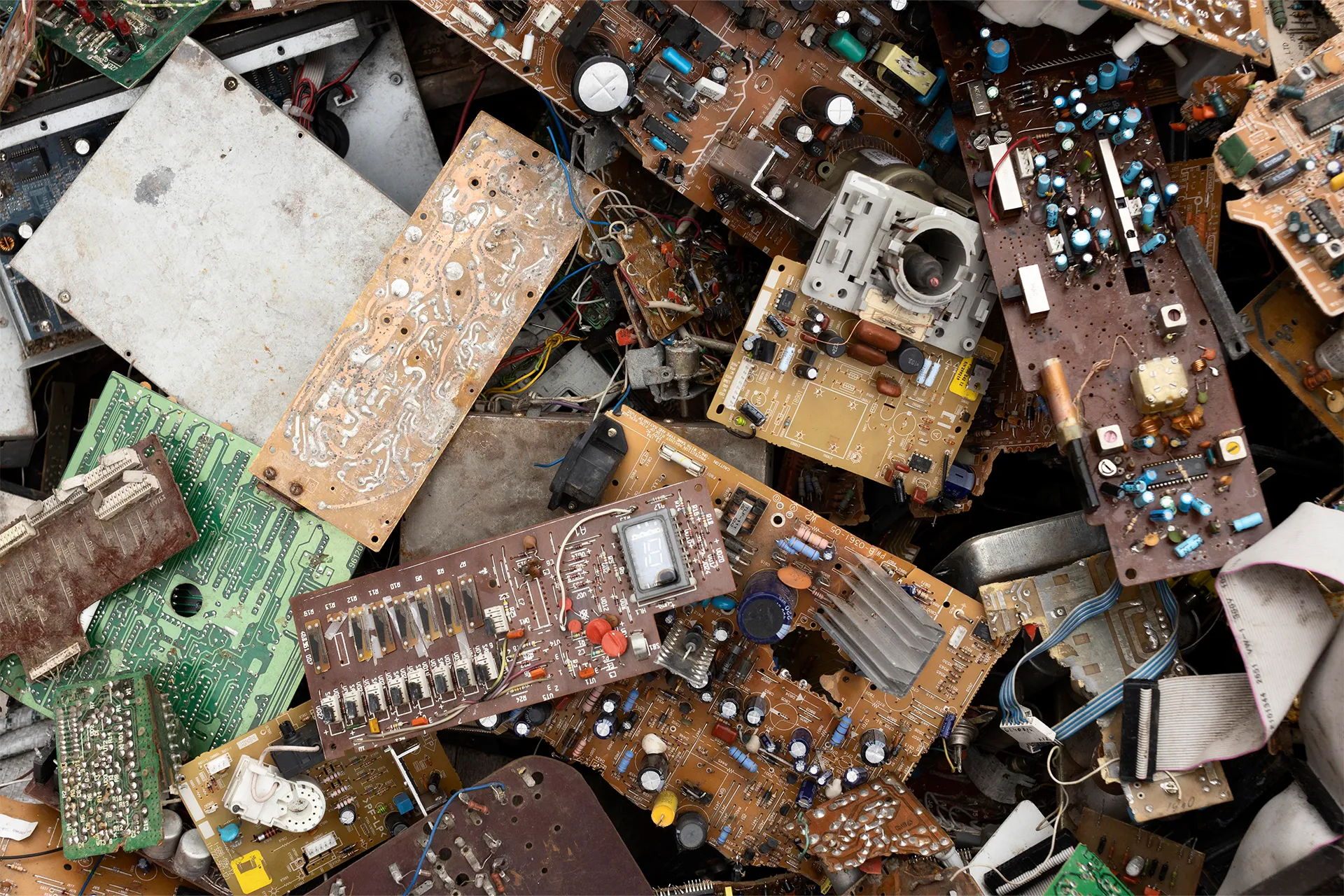
Electronic waste represents one of the greatest environmental challenges of the 21st century. Every year, the world generates more than 50 million tons of technological waste, and the majority is not recycled correctly. Phones, computers, tablets, televisions, and other electronic devices end up in landfills or are exported to developing countries without proper treatment.
This type of waste not only represents an economic loss due to the materials it contains — such as lithium — it is also an environmental threat. Many devices contain toxic substances that contaminate soil, water, and air, affecting human health and biodiversity. Faced with this situation, the solution lies not only in recycling, but in rethinking the entire technological system.
From Waste to Resource: The Hidden Value of Electronic Rubbish
Technological waste contains valuable materials — a single smartphone can contain up to 60 different elements from the periodic table. Recovering them is key to the circular economy, as each recycled component reduces the need to extract new resources, lowering the environmental impact of mining.
According to the United Nations Global E-waste Monitor, in 2020 we were only able to manage 22% of electronic waste. The rest ends up outside the system or is handled illegally. Sustainable technology and ecodesign strategies can change this. Designing more durable products that are easy to disassemble and repair is an urgent necessity.
Technology companies play a fundamental role, and some are already committed to modular and recyclable products.
Technology and Innovation in the Service of Recycling
Technological innovation is key to improving the management of electronic waste. Today, artificial intelligence is already being used to classify electronic components in recycling plants. Automated robots identify and separate materials with great precision, making it possible to increase recycling efficiency and recover more valuable resources.
Furthermore, the Internet of Things can help track devices throughout their entire lifecycle, facilitating their collection when they are no longer in use. It also improves traceability and prevents waste from ending up outside the legal treatment system.
Blockchain is being explored to certify recycling processes and ensure that materials are reused responsibly. Technology is not the problem — when used well, it is an essential part of the solution.
Education, Public Policy, and Responsible Consumption
Change does not depend solely on companies or technology. Citizens play a fundamental role. Buying less, repairing more, and recycling correctly are habits that make a real difference. Choosing devices with a longer useful life also helps reduce electronic waste.
It is also vital that clear public policies exist. Governments must establish extended producer responsibility laws, promote accessible collection points, and run awareness campaigns.
Environmental and digital education must include the management of technological waste. Understanding the impact of our devices leads us to use them more consciously.
A Future with Less Waste is Possible
Reducing electronic waste is a challenge, but also an opportunity. A circular economy based on technology and sustainability can create jobs, protect the planet, and secure resources for the future.
At QALEON, we are committed to technological advancement to revolutionize the industry through sustainability. That is why we have developed SineQia®, an innovative 360 platform that provides real-time tracking of KPIs and key metrics related to business sustainability.
With SineQia® you can make informed decisions based on accurate data, optimize your processes, and meet your sustainability objectives efficiently and transparently.