
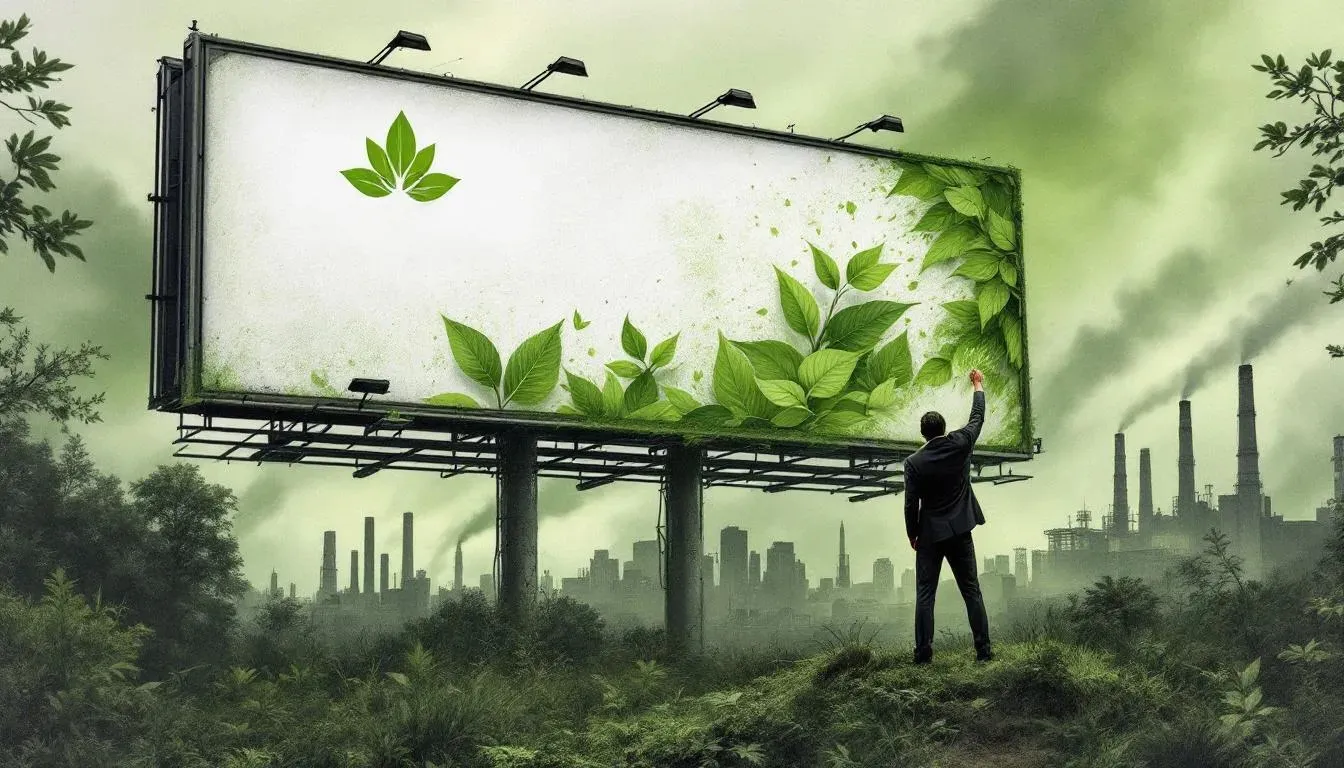
According to a study by the European Commission, 42% of environmental claims made by companies are inaccurate, false, or misleading. This phenomenon, known as greenwashing, is more common than one might assume and carries serious implications for both sustainability and consumer trust.
What Is Greenwashing?
Greenwashing is a deceptive practice in which companies promote products, services, or policies as environmentally responsible when they actually are not. This term, which combines «green» and «whitewashing,» describes the strategies used to project an ecological image without a genuine commitment to sustainability.
How Does Greenwashing Work?
Greenwashing manifests through various strategies and tactics that companies use to create a false or exaggerated perception of their environmental commitment. Below are some of the most common ways in which greenwashing operates:
Misleading advertising: Companies often use advertising campaigns that exaggerate the environmental benefits of their products or services. This can include the use of terms such as «ecological,» «green,» or «natural» without any real or sufficient basis for such claims. Images of nature and green symbols are also common tools used to reinforce this false perception.
False labels and certifications: Another common tactic is the creation of internal labels and certifications that appear official but lack credibility and rigor. Companies may design their own ecological badges to give an impression of authenticity that is not backed by independent and recognized bodies.
Focus on minor aspects: Companies may highlight a minor sustainable aspect of their product while concealing the overall negative environmental impact. For example, they may promote the use of recycled materials in packaging while their production processes are highly polluting and unsustainable.
Omission of critical information: Greenwashing often involves the omission of crucial information about the environmental impact of a product or service. Companies may highlight minor benefits while omitting the more significant negative aspects, creating a distorted image of their actual impact.
Questionable carbon offsets: Some companies claim their activities are carbon neutral thanks to offset programs. However, these programs often lack transparency and effectiveness. Offset projects may have no real and meaningful impact on emissions reduction, serving more as a marketing mechanism than as an authentic solution.
In Conclusion…
The future of greenwashing is closely linked to stricter government regulation and consumer demand for transparency. More rigorous regulations, along with harsher penalties, could deter companies from resorting to greenwashing. Furthermore, growing consumer environmental awareness and their demand for transparency will push companies to be more truthful in their practices.
Consumer education will play a key role in empowering people to detect and avoid greenwashing. Meanwhile, sustainable innovation in the business market could reduce the need for greenwashing, as companies adopt more authentically sustainable practices to maintain their competitiveness. Together, these forces could bring about a significant shift in how companies approach sustainability and reduce greenwashing in the future.
At QALEON we have developed SineQia®, an innovative 360 platform that provides real-time monitoring of KPPs and performance metrics related to business sustainability.
With SineQia® drive the sustainability and performance of your company at every level through process optimization.